
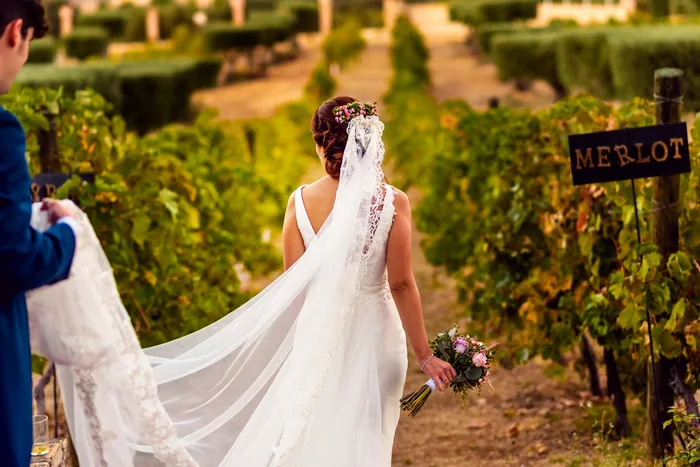
Getting married in Spain as a foreigner is entirely possible and tens of thousands of couples do it every year. But the paperwork is more involved than booking a venue. Spain has specific legal requirements for foreign nationals, and whether you want your marriage to be legally recognised in Spain, in your home country, or both, determines which steps you need to take and in what order.
This guide covers the two types of legally valid ceremony in Spain, the documents you need as a foreigner, what happens if you married abroad and now live in Spain, how name changes work, and when a prenuptial agreement under Spanish law makes sense.
Civil vs Religious: Which Type of Ceremony is Legally Valid?
Spain recognises two types of marriage as legally binding: civil ceremonies conducted by a Spanish judge or civil registrar, and religious ceremonies held by recognised faiths. Both produce a legal marriage under Spanish law. The ceremony type affects where you start the paperwork, not whether the marriage is valid.
Civil ceremony
Civil weddings take place at the Registro Civil (civil registry) or at a location approved by the local authority. A judge or civil registrar officiates, and two witnesses must be present. This is the most straightforward route for foreigners, since the paperwork flows through one official channel: the Registro Civil where one of you is registered or resident.
One important point: at least one of you must be a Spanish national or have been legally resident in Spain for a minimum of two consecutive years. If neither of you meets this requirement, you can still marry in Spain, but only under the personal law of one of the parties, which may involve additional documentation from your home country's embassy or consulate.
Religious ceremony
Catholic, Protestant, Jewish, and Islamic ceremonies are legally recognised in Spain under bilateral agreements with the Spanish state. A Catholic wedding in a Spanish church, for example, produces a legally binding marriage, but the parish priest must also file the marriage with the Registro Civil for it to be entered on the register. The legal steps happen alongside the religious ones, not instead of them.
Symbolic ceremonies (beach weddings, non-denominational blessings, ceremonies conducted by a celebrant) are not legally binding in Spain. If you want a symbolic ceremony and a legal marriage, you need to do both: typically a quick civil ceremony beforehand at the registry, then the symbolic event you planned.
A symbolic ceremony in Spain gives you beautiful photos but no legal marriage. If you want the marriage to be recognised in Spain, the UK, or the US, you must complete a legal civil or recognised religious ceremony with the Spanish authorities.
Documents Required for Foreigners Marrying in Spain
The Registro Civil requires a specific set of documents before it will authorise a marriage. These are the standard requirements for foreign nationals. Your exact list may vary slightly depending on your nationality and whether either of you has been previously married.
| Document | Notes |
|---|---|
| Valid passport | Both parties |
| Full birth certificate | Apostilled and translated into Spanish by a sworn translator (traductor jurado) |
| Certificate of no impediment to marry | Known in the UK as a Certificate of No Impediment (CNI), issued by the General Register Office (GRO) or a UK consulate. US nationals obtain this from the US Embassy in Madrid. |
| Proof of residence or nationality | TIE (residence card), empadronamiento (local registration certificate), or passport |
| Divorce or death certificate (if previously married) | Apostilled and translated into Spanish. A foreign divorce decree must be formally recognised in Spain if not already done. |
Most documents must have been issued within the six months before you submit your application to the Registro Civil. Start collecting them early. The CNI from the UK GRO typically takes 3-4 weeks, and apostilling adds further time. Build in at least 2-3 months from starting the paperwork to the ceremony date.
The pre-marital interview (expediente matrimonial)
Once you submit your documents, the Registro Civil opens an expediente matrimonial, the formal application file. Both parties are usually called in separately for a short interview with the registrar to confirm the marriage is genuine and voluntary. This is standard procedure, not a red flag. After the interview, there is a mandatory 15-day waiting period before the ceremony can take place.
UK nationals: the Certificate of No Impediment
UK nationals need a CNI from the General Register Office. You apply in person at a UK register office and give 28 days' notice of your intention to marry abroad. The certificate is then issued and you take it (apostilled) to Spain. The UK GOV.UK guidance on getting married abroad covers this step by step.
US nationals: the affidavit route
The US does not issue a direct equivalent of the CNI. Instead, US nationals typically obtain an affidavit (a sworn statement) from the US Embassy in Madrid confirming they are free to marry. The Embassy publishes its current requirements and fee schedule. Check directly before you plan, as requirements can change. The US Embassy in Madrid's marriage guidance page is the authoritative source.
Marriage paperwork getting complicated?A family lawyer in Spain can manage the expediente matrimonial, chase apostilles, and liaise with the Registro Civil on your behalf, so you deal with the wedding, not the admin.
Find a family lawyer in Spain ->The Civil Marriage Process: Step by Step

Collect birth certificates, passports, CNI or affidavit, and any divorce/death certificates. Get everything apostilled and translated by a sworn translator. Allow 2-3 months for this stage.
Take all documents to the Registro Civil corresponding to your place of residence in Spain. They open the expediente matrimonial and set dates for the pre-marital interviews.
Both parties attend separately. The registrar asks basic questions about how you met and your plans. It takes around 15-20 minutes each.
The mandatory publication period. The Registro Civil posts a notice to allow any objections. In practice this is a formality, but the wait is legally required.
The civil ceremony takes place with the registrar and two witnesses present. You sign the Libro de Familia (family book), your official Spanish marriage record. The marriage is entered on the Registro Civil the same day.
UK nationals should register the marriage with the FCDO via the GOV.UK registration service. US nationals report the marriage to the State Department using Form DS-2029 if they want it on file, though this is optional.
Registering a Foreign Marriage in Spain
If you married outside Spain and now live here, you may want, or need, to register that marriage in the Spanish Registro Civil. This is not automatic. Spain does not import foreign marriage records without a formal application.
Registration is mandatory if one of you is a Spanish national. For foreigners resident in Spain, it is not legally required, but it has practical consequences: without it, Spanish authorities will have no record of your marriage, which matters for residency applications, inheritance, property ownership, and tax filing as a married couple.
What you need to register a foreign marriage
- The original foreign marriage certificate, apostilled by the issuing country
- A sworn Spanish translation of the certificate
- Passports of both spouses
- Proof of Spanish residency (TIE, empadronamiento)
You submit the application to the Registro Civil Central in Madrid, or to the Spanish consulate in the country where the marriage took place. Processing times vary, typically 3-6 months for the Registro Civil Central. If the marriage was recently conducted in Spain by a foreign official (as sometimes happens with destination weddings using a notary from the couple's home country), this is not recognised as a Spanish marriage and you will need to go through the full Spanish civil marriage process separately.
Marital Property Regimes: What Governs Your Assets
Spain has two default marital property regimes, and which one applies to you depends on where you marry and where you live, not simply on your nationality. Getting this wrong has real consequences for property ownership, inheritance, and divorce settlements.
Sociedad de Gananciales
Community of property. Assets and income acquired during the marriage belong equally to both spouses. On divorce or death, the community estate is divided 50/50.
Separacion de Bienes
Separation of property. Each spouse owns and manages their assets independently. No shared estate is created during the marriage. On divorce, each keeps what they own.
For foreign couples, EU Regulation 2016/1103 (in force since January 2019) means the applicable regime is usually determined by the law of the country where you first established your habitual residence after marriage, not by Spanish regional law automatically. If you married abroad and then moved to Spain, your original marital property regime may still govern your assets here, unless you explicitly change it.
This matters most when buying property in Spain. A couple married under UK law (which applies separation of property rules by default) may find their Spanish property treated differently to what they expected if they assumed Spanish community property rules applied. If you are buying property in Spain, clarifying your marital property regime before signing anything is worth doing.
Prenuptial Agreements Under Spanish Law
Spanish law calls prenuptial agreements capitulaciones matrimoniales. They are not just for the wealthy. They are particularly relevant for expat couples because they let you choose your marital property regime explicitly, rather than leaving it to be determined by default rules that may be unclear or disadvantageous.
A capitulaciones matrimoniales must be signed before a Spanish notary (notario) to be valid. This can be done before the wedding or at any point during the marriage. Without this formal step, in front of a notary, with both parties present, the agreement has no legal force in Spain.
What a capitulaciones matrimoniales can cover
- Choosing your marital property regime (gananciales vs separacion de bienes, or another arrangement)
- Protecting assets you owned before the marriage
- Agreeing how specific assets (property, a business, an inheritance) will be treated during and after the marriage
- Setting out arrangements for children from a previous relationship
What it cannot do
A capitulaciones matrimoniales cannot override the basic rights of either spouse or harm the rights of children. Spanish courts will not enforce any clause that leaves one party without reasonable financial protection. The agreement also needs to be updated via a notary if you change your minds. You cannot amend it informally.
If you are a foreign national marrying in Spain and one or both of you owns significant assets (property in Spain, a business, investments), a prenuptial agreement is one of the clearest ways to avoid disputes later. The conversation with a family lawyer in Spain takes a few hours. The legal clarity it creates lasts the length of the marriage.
Name Changes After Marriage in Spain
Spanish naming law is different from UK and US custom, and this catches many expats off guard.
Under Spanish law, Spanish nationals do not change their surnames on marriage. Each person keeps both of their birth surnames (first from their father, second from their mother) for life. A Spanish woman does not take her husband's name. A Spanish man does not take his wife's name. This is not optional. It is the legal default.
For foreigners resident in Spain, the situation depends on your home country's law. If your national law allows a name change on marriage, Spain will generally respect that, but you need to act quickly. You have five days from the date of the Spanish civil ceremony to request the name change at the Registro Civil where the marriage was registered. Miss that window and you will need to go through a separate, more involved procedure.
In practice, most UK nationals who want to use a married name in Spain do so by updating their UK passport first (using the marriage certificate as evidence), then using the new passport to update their Spanish residency documents (TIE). This is simpler than trying to change the name on Spanish documents directly and works for most administrative purposes.
Your NIE number does not change when you marry. But if you change your name, you will need to update your TIE (residency card) and any Spanish documents (driving licence, bank accounts, property deeds) to reflect the new name. Start with the TIE at your local Extranjeria office. Everything else follows from that.
When Do You Actually Need a Family Lawyer?
Not every couple marrying in Spain needs a lawyer. But several situations make legal advice worth getting.
You are marrying someone of a different nationality to yours. Two different national laws may both want to govern the marriage. A lawyer identifies which law applies to the property regime, which courts have jurisdiction if things go wrong, and whether you need to make an explicit choice under EU Regulation 2016/1103.
Either of you owns property in Spain. The marital property regime affects how that property is held and what happens to it on death or divorce. If you own property in multiple countries, you may need advice on how each country's rules interact.
Either of you has been previously married. A foreign divorce must be formally recognised in Spain before you can remarry here. The Ley de Cooperacion Juridica Internacional (Law 29/2015) governs recognition. Not all divorces are automatically accepted, particularly those from countries without bilateral agreements with Spain. A lawyer checks this before you start the marriage process, not after.
You want a prenuptial agreement. The capitulaciones matrimoniales must be drafted and signed before a notary. A family lawyer prepares the draft, advises on what it can and cannot achieve, and ensures it will hold up if it is ever tested.
You are registering a foreign marriage in Spain and the paperwork is complex. The Registro Civil Central can return incomplete applications, adding months to the process. A lawyer submits a complete file the first time.
If none of the above apply (two foreigners, no previous marriages, no property, no complex assets), the civil marriage process is something many couples handle themselves with patience and time.
Getting married in Spain and need legal support?ExpatLawyerSpain connects you with vetted English-speaking family lawyers across Spain, free to use, no hidden fees.
Find a family lawyer in Spain ->Frequently Asked Questions
The Short Version
Getting married in Spain as a foreigner requires a legal civil or recognised religious ceremony. Symbolic ceremonies have no legal standing. You need a Certificate of No Impediment (UK) or an affidavit from the US Embassy, apostilled birth certificates, and proof of residency or nationality. The process takes a minimum of 3-4 months from starting the paperwork. If you own property, have been previously married, or want a prenuptial agreement, a family lawyer in Spain is worth the investment before you start the process, not after.
For more on the legal side of life in Spain, the guide to finding an English-speaking lawyer in Spain covers how to choose the right firm. If you have assets to protect, Spanish inheritance law for expats is worth reading before the wedding. Marriage changes what happens to your estate under Spanish law. And if you are settling here for the long term, our guide to retiring in Spain walks through the visa, pension tax and healthcare steps that follow.
If you need an English-speaking family lawyer in Spain, ExpatLawyerSpain connects you with vetted firms across Spain, free to use, no hidden fees.